Flags of the World
Flags drawn at random from all 195 countries. The wrong answers come from the same part of the world, and when a flag has a near twin somewhere else, the twin is one of the options. Every round is a different set.
Questions people get stuck on
How many national flags are there?
›
This quiz uses 195: the 193 UN member states plus the two permanent observer states, Vatican City and Palestine. Territories, dependencies and partly recognised states such as Taiwan and Kosovo have flags of their own, but they are not in the pool.
Which two countries have the same flag?
›
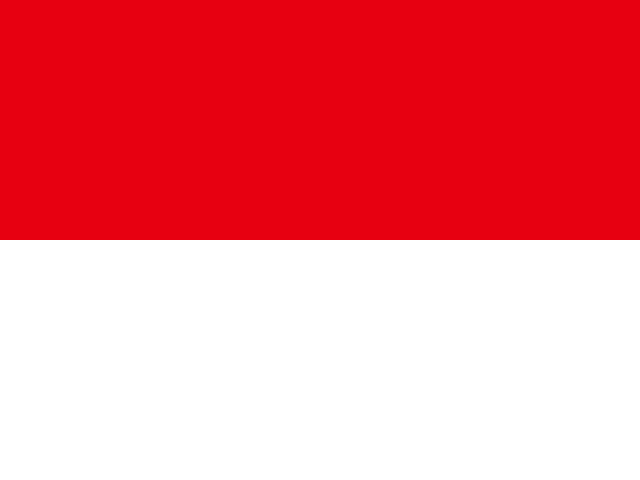
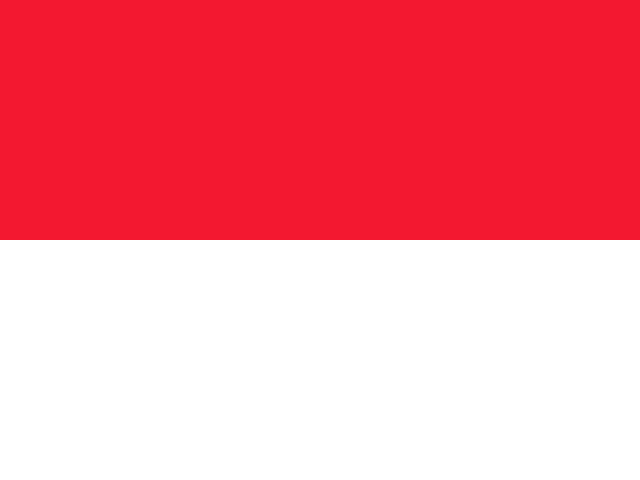
Chad and Romania come closest. Both are blue, yellow and red vertical stripes, and the only difference is the shade of blue, darker on Chad's. Indonesia and Monaco are the other famous pair: red over white on both, told apart only by their proportions.
Which country's flag is not a rectangle?
›
Nepal's. It is two stacked triangular pennants, with a moon in the upper one and a sun in the lower. Every other national flag is a rectangle or, in two cases, a square.
Which countries have square flags?
›
Switzerland and Vatican City. Swiss ships use a rectangular version at sea, but the national flag itself is square.
Why do so many African flags use green, yellow and red?
›
They are the colours of Ethiopia, which kept its independence through the colonial period apart from the Italian occupation of 1936 to 1941. Ghana took them up at independence in 1957, and many of the countries that followed did the same. Mali, Senegal, Guinea, Cameroon and Togo all use them.
Why do Australia and New Zealand both have the Union Jack?
›
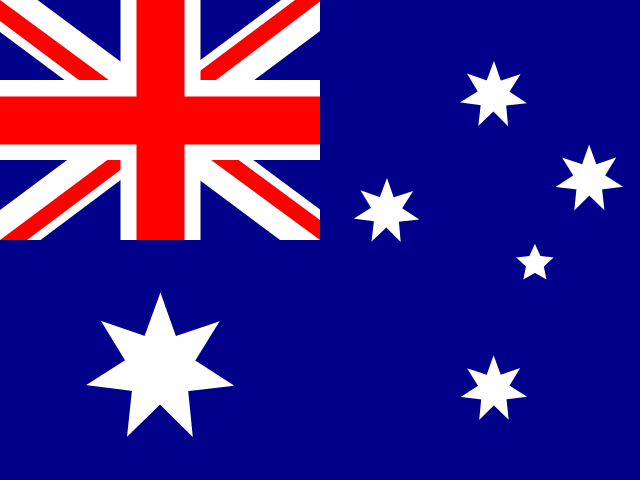
Both flags started as British ensigns, the design used across the Empire with the Union Jack in the top corner. Each country added the Southern Cross to mark where it is. New Zealand held two referendums on changing its flag in 2015 and 2016, and kept it.
The flags people mix up
Most flags are built from a small set of parts: two or three stripes, a cross, a star, a coat of arms. Reuse them long enough and some countries end up with nearly the same flag. These 12 groups cover 31 of them, and the game puts them next to each other on purpose.
Chad, Romania, Andorra and Moldova
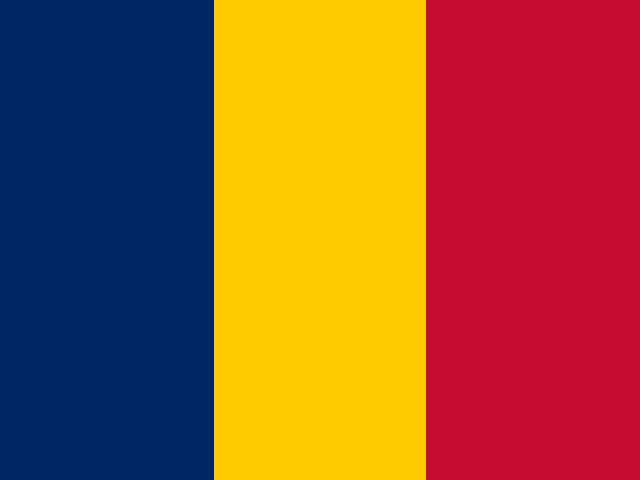 CHAD
CHAD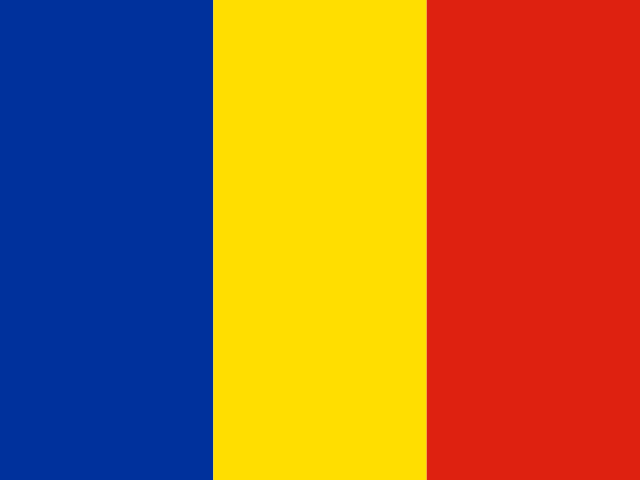 ROMANIA
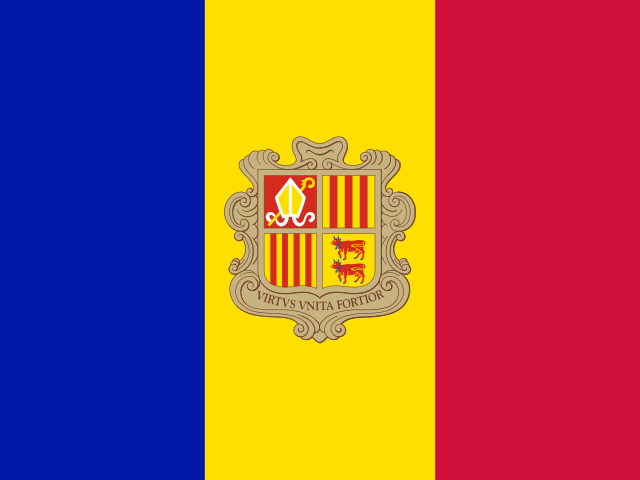 ANDORRA
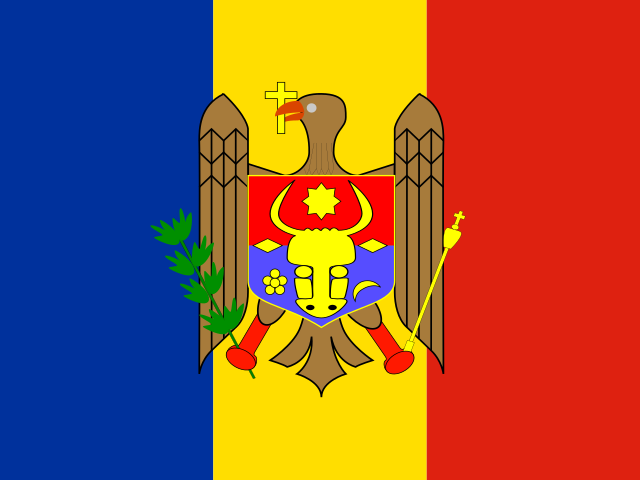 MOLDOVA
Chad and Romania fly the same blue, yellow and red vertical stripes, and the only difference is that Chad's blue is a shade darker. Andorra and Moldova use the same three colours with a coat of arms on the middle stripe.
Indonesia, Monaco and Poland
 INDONESIA
 MONACO
 POLAND
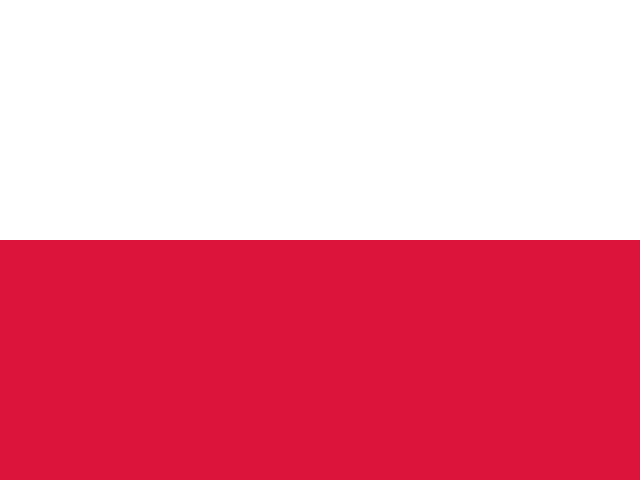
Indonesia and Monaco are both a red band over a white one with nothing else on the flag. Monaco's is shorter, 4:5 against Indonesia's 2:3. Poland uses the same two colours the other way up, white over red.
Australia and New Zealand
 AUSTRALIA
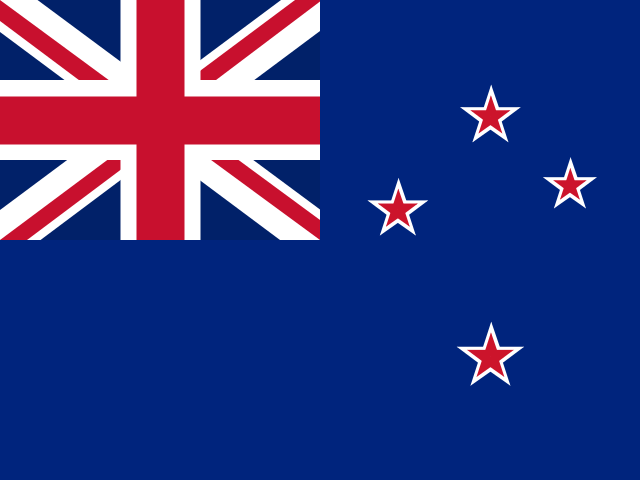 NEW ZEALAND
Both put the Union Jack in the top corner of a dark blue field with the Southern Cross on the right. Australia has six white stars, one of them large and under the Union Jack. New Zealand has four red stars outlined in white.
Ireland and Côte d'Ivoire
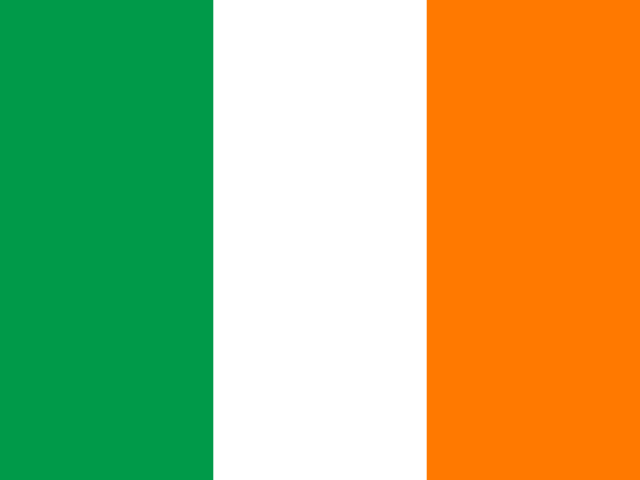 IRELAND
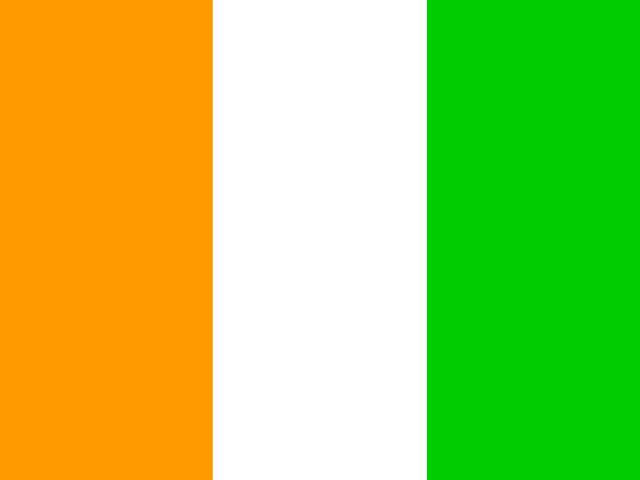 CÔTE D'IVOIRE
The same three vertical stripes in mirror order. Ireland has green next to the flagpole, Côte d'Ivoire has orange.
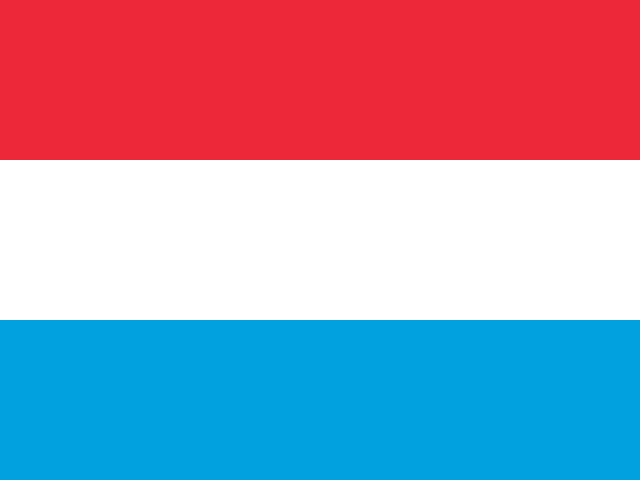
Netherlands and Luxembourg
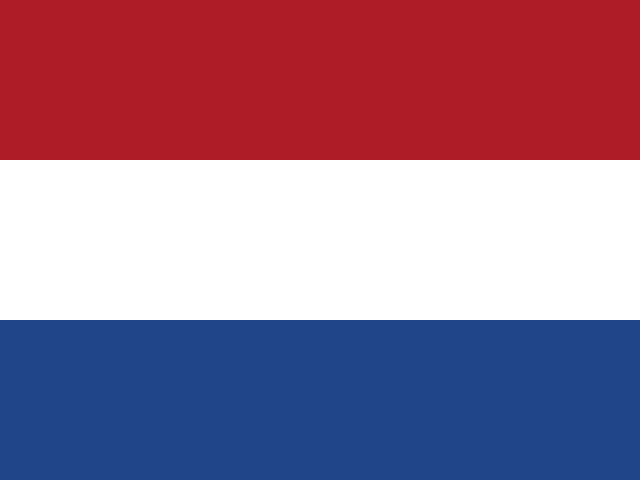 NETHERLANDS
 LUXEMBOURG
Red, white and blue horizontal stripes on both. Luxembourg's blue is a lighter sky blue and its flag is a little longer.
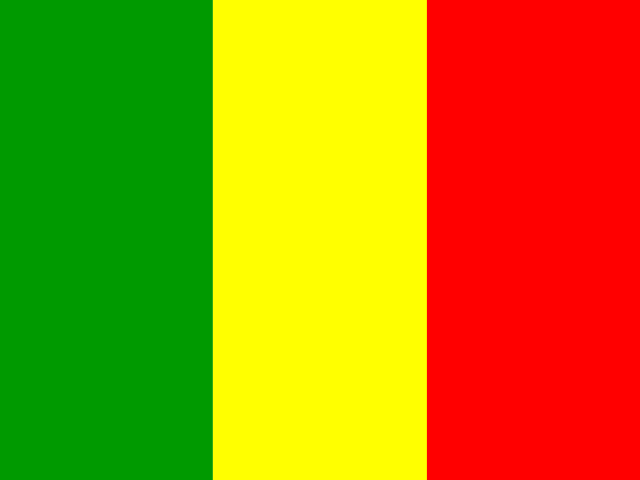
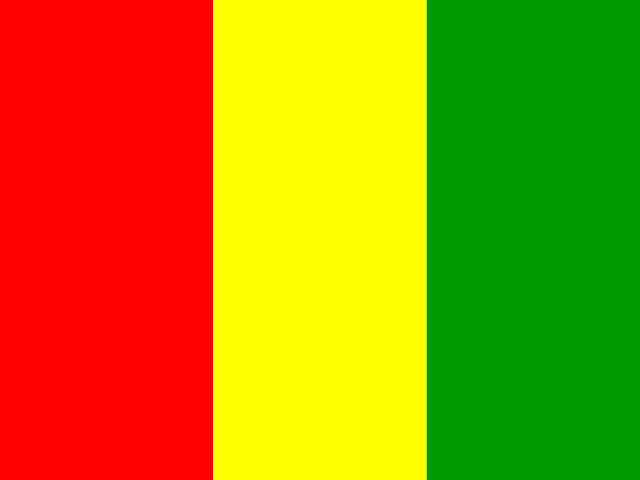
Mali, Senegal and Guinea
 MALI
MALI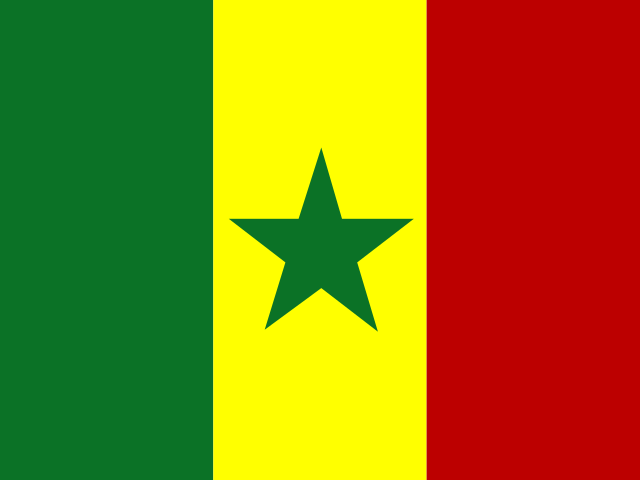 SENEGAL
 GUINEA
Mali is green, yellow and red in vertical stripes. Senegal is the same flag with a green star in the middle. Guinea runs the colours the other way, red, yellow, green.
Russia, Slovakia and Slovenia
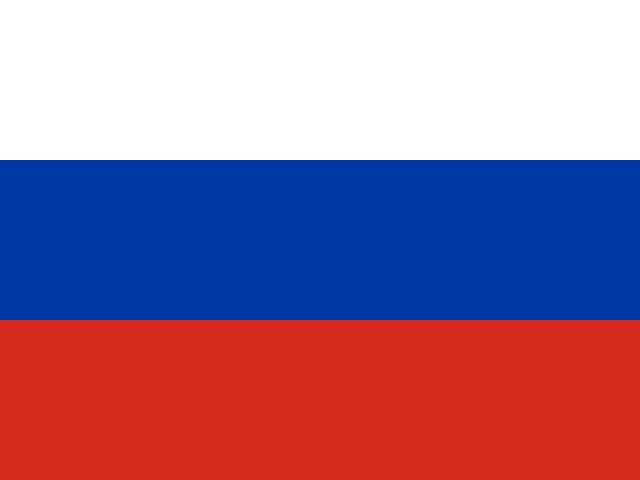 RUSSIA
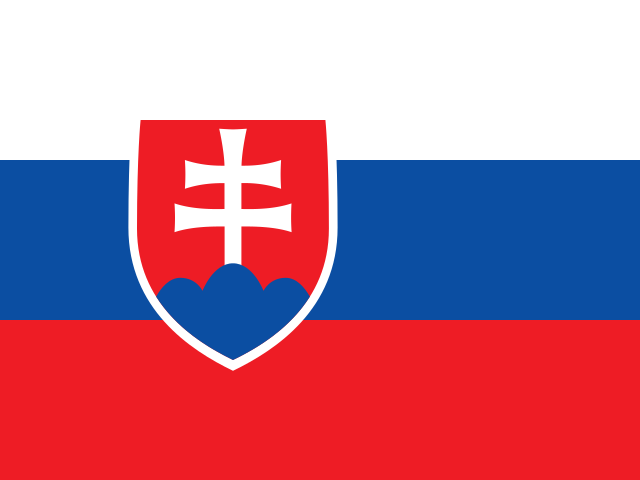 SLOVAKIA
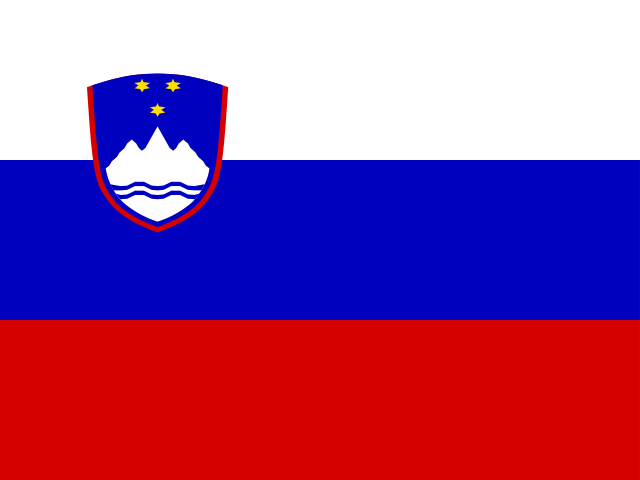 SLOVENIA
White, blue and red horizontal stripes. Russia's flag has nothing else on it. Slovakia adds a shield with a white double cross on three blue hills, Slovenia a shield with the three peaks of Triglav, both toward the flagpole.
Colombia, Ecuador and Venezuela
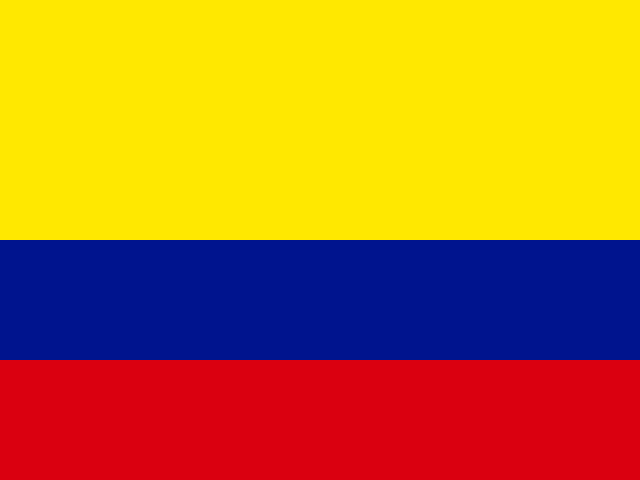 COLOMBIA
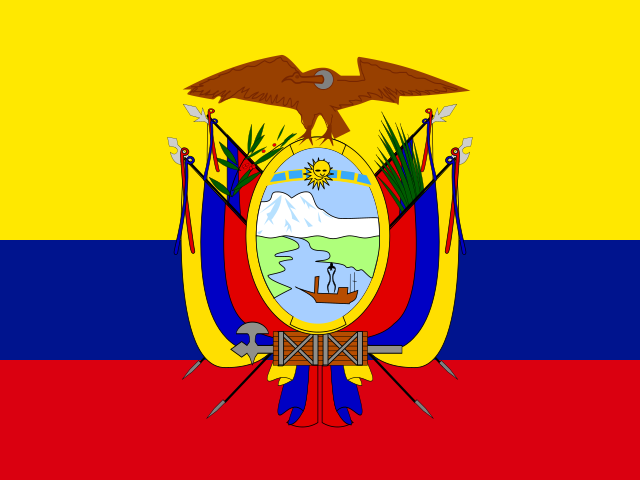 ECUADOR
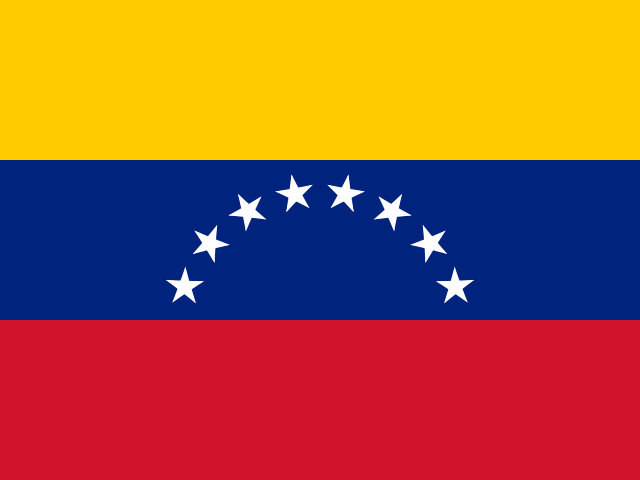 VENEZUELA
All three come from the flag of Gran Colombia: yellow, blue and red. On Colombia's the yellow takes up the top half. Ecuador uses the same proportions and adds its coat of arms. Venezuela's stripes are equal, with an arc of eight white stars in the blue.
Honduras, Nicaragua and El Salvador
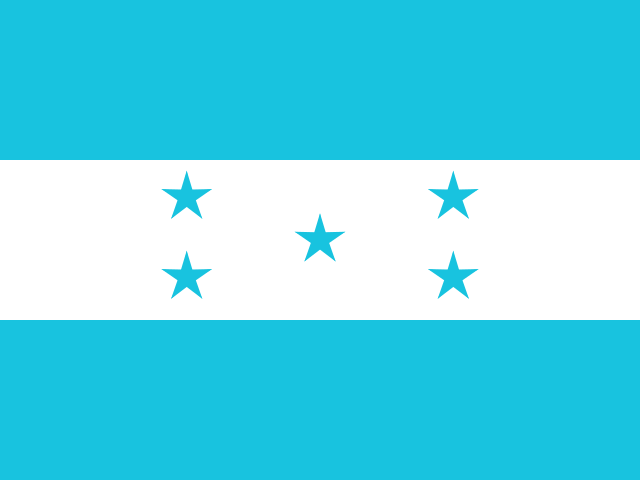 HONDURAS
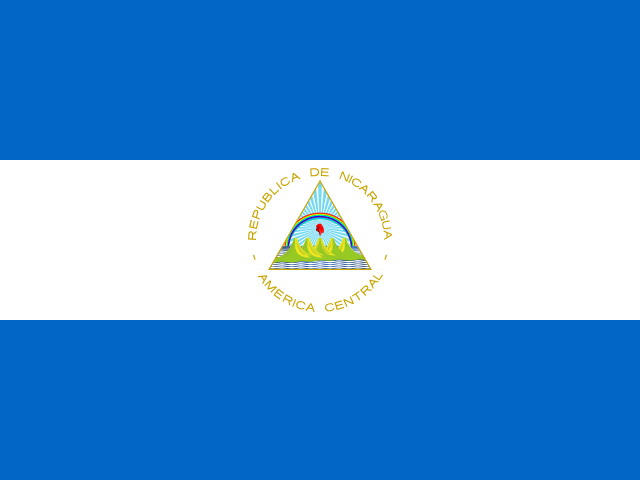 NICARAGUA
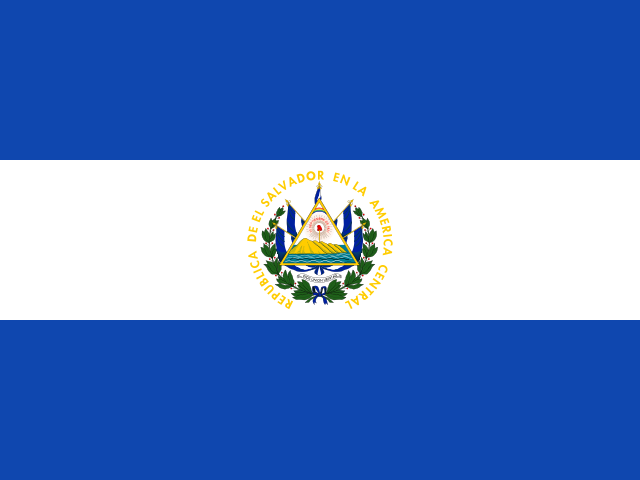 EL SALVADOR
Blue, white, blue, left over from the Federal Republic of Central America. Honduras has five blue stars in the middle. Nicaragua and El Salvador both put a coat of arms built around a triangle there, and Nicaragua's blue is lighter.
Norway and Iceland
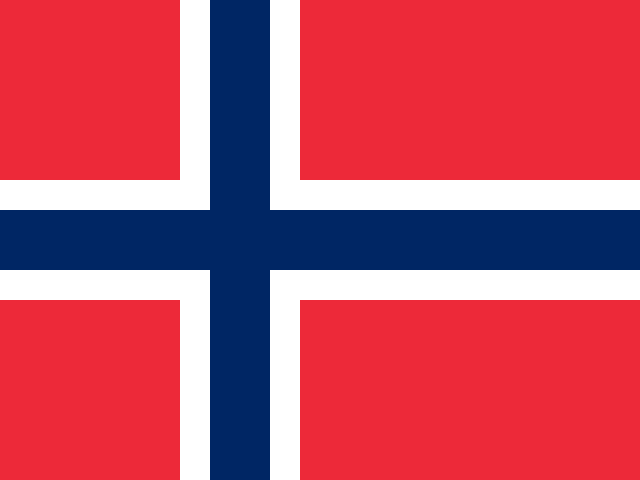 NORWAY
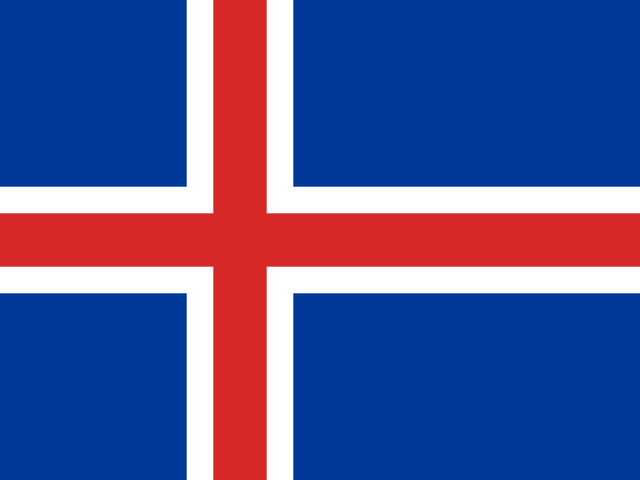 ICELAND
The same design with the colours swapped. Norway is a blue cross edged in white on a red field. Iceland is a red cross edged in white on a blue field.
Jordan and Palestine
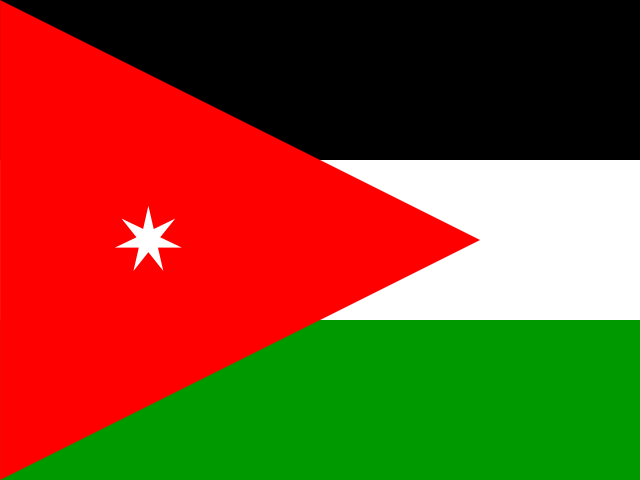 JORDAN
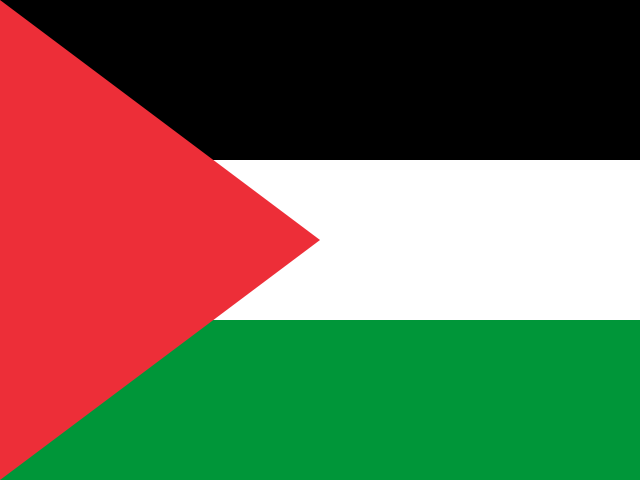 PALESTINE
Black, white and green stripes with a red triangle at the flagpole. Jordan's triangle holds a small white seven-pointed star, Palestine's is empty.
Bahrain and Qatar
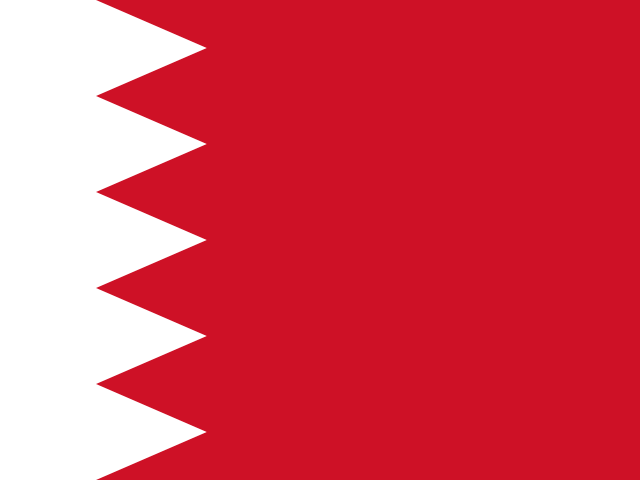 BAHRAIN
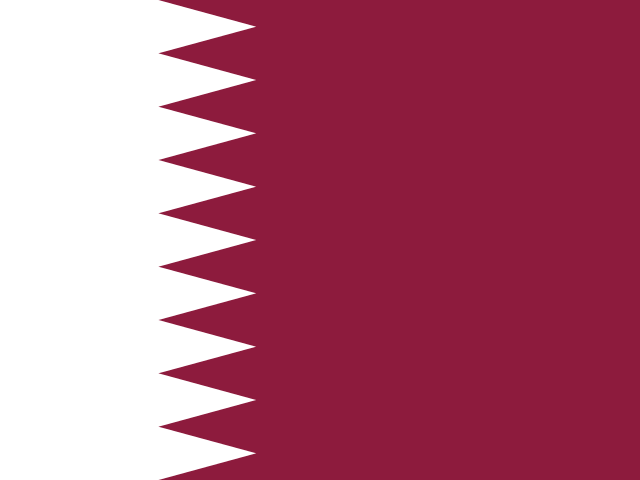 QATAR
QATAR
Both have a white band with a zigzag edge next to the flagpole. Bahrain's flag is red with five points. Qatar's is maroon with nine, and much longer.
Flags that break the usual rules
Almost every national flag is a rectangle, one design, the same on both sides. A handful are not, and they tend to be the ones people remember once they have seen them.
- Mozambique
- An AK-47 with a bayonet, crossed with a hoe over an open book. No other national flag carries a modern assault rifle.
- Nepal
- The only national flag that is not a rectangle: two stacked pennants, a moon in the upper one and a sun in the lower.
- Switzerland
- One of only two square national flags. The other belongs to Vatican City.
- Vatican City
- Square, like Switzerland's. Yellow and white, with the crossed keys and papal tiara on the white half.
- Paraguay
- The two sides are different. The front carries the national coat of arms, the back the seal of the treasury.